

Hallo, ek is Brian. Aangename kennis.
Language learning is often (but not always) part of missionary service.
Even where one’s own native language is spoken, there are usually other languages that are either closer to people’s hearts or relied upon by people who don’t speak that shared language.
In our case, English is one of South Africa’s official languages, and English is also the main working language for our mission and its offices, so we never had to learn another language in order to serve there. That was very helpful, as language learning has always been challenging for me.
However, there are indeed many people in South Africa who don’t speak English well or at all, and there are relational benefits in speaking in their heart language even if they do. South Africa has eleven official languages—Afrikaans, English, Ndebele, Pedi, Sotho, Tsonga, Tswana, Venda, Xhosa and Zulu—as well as unofficial but common ones like French and Portuguese among immigrants working there. When we lived there, my very inadequate Spanish was entirely irrelevant, but Tracy’s high school familiarity with French was a connection and blessing to many of the car guards (parking lot attendants) we met there. It may not have been their first language, but it was a language that connected to their homelands and clearly made them feel a bit more welcome.
Both because I hope to connect with people as Tracy could and because I recognize that learning a South African language would demonstrate respect, I am studying Afrikaans. Although its connection to apartheid understandably complicates its relationship to many people, it is still a first language for about one-eighth of the population and spoken by about three times that many, being the nation’s third most common first language (after Xhosa and Zulu, which are also on my wishlist).
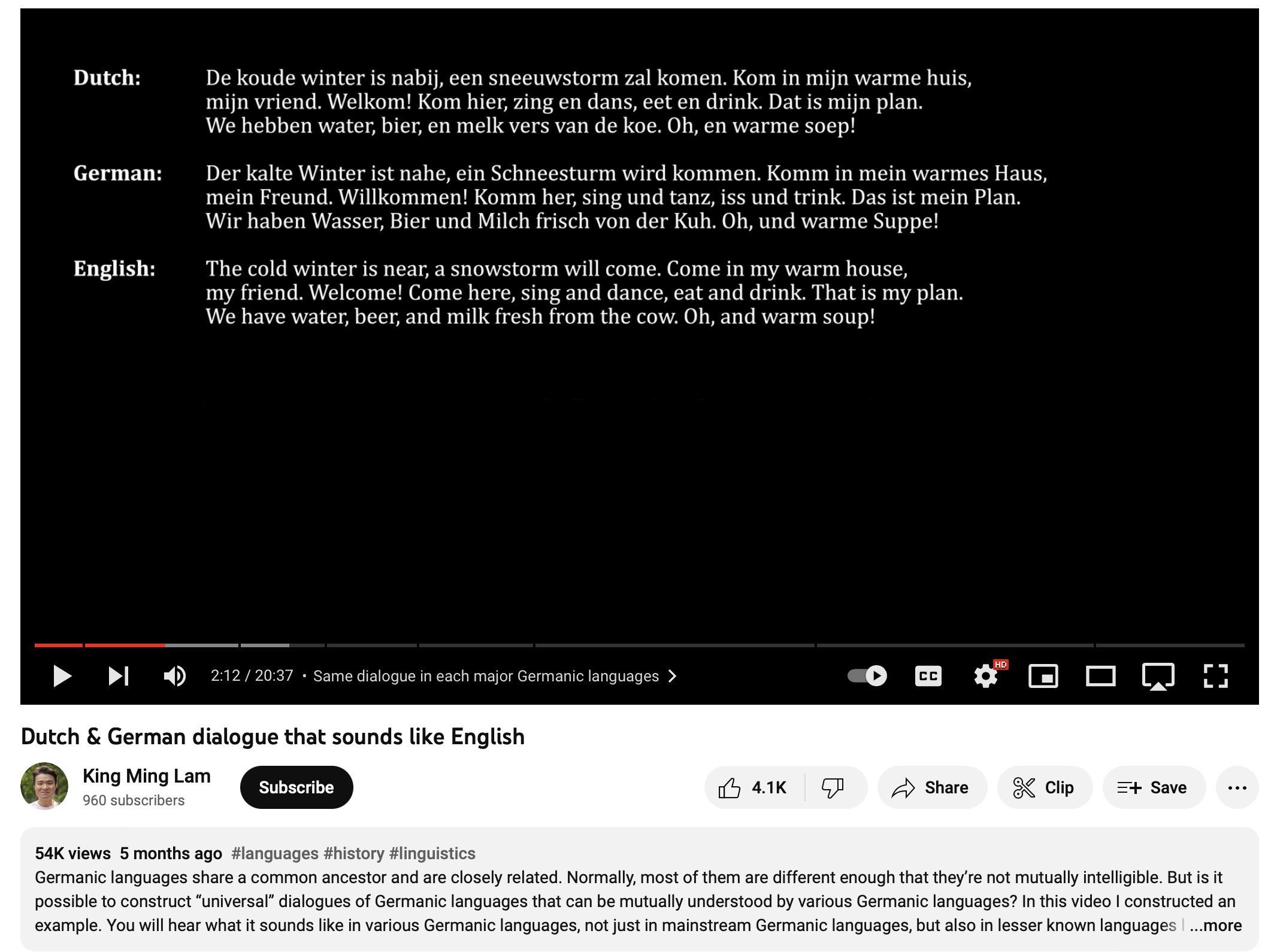
Afrikaans is also recognized as among the easiest languages for English-speakers to learn, owing to them being related through Afrikaans’ roots in Dutch and English’s roots in German. Pronunciation is different, but many words are cognates, and others look or sound close enough to be quickly learned or even guessed, such as gras for grass, dogter for daughter, and hallo for hello. That all contributes to my studies (remote and alone) being more likely to succeed and to be achieved faster.
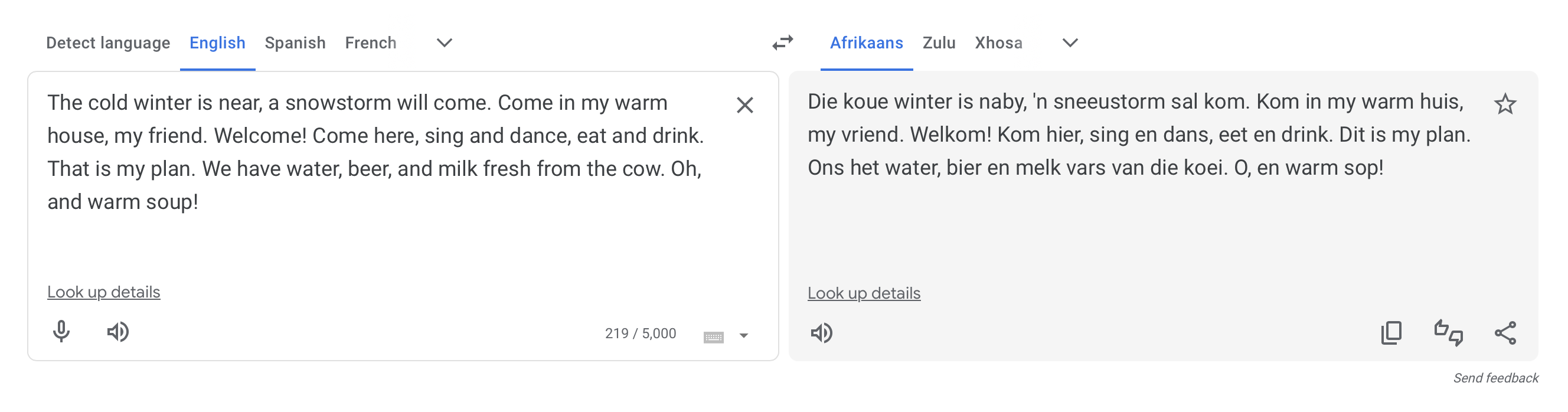
I’ve also been able to get some good resources for learning Afrikaans, such as “teach yourself” books and audio recordings, English-Afrikaans dictionaries (as well as an actual Afrikaanse Woordeboek), and books to read in Afrikaans for practice. YouTube videos and other online resources also help, especially with pronunciation, but there are sounds that are hard, such as guttural G and rolled R.
Still, I’m mostly on my own, with little chance to get feedback. Hallo, ek is Brian. Aangename kennis. “Hello, I am Brian. Nice to meet you.” That G is guttural and took a lot of practice, so it was very encouraging this last trip when an Afrikaner complimented it after a brief conversation in English.
“Your ‘G’ was perfect; that’s often quite difficult for Americans.”
Baie dankie, vriend. Baie dankie.
 The Heffron Family