A look at SIM’s history from 1966.
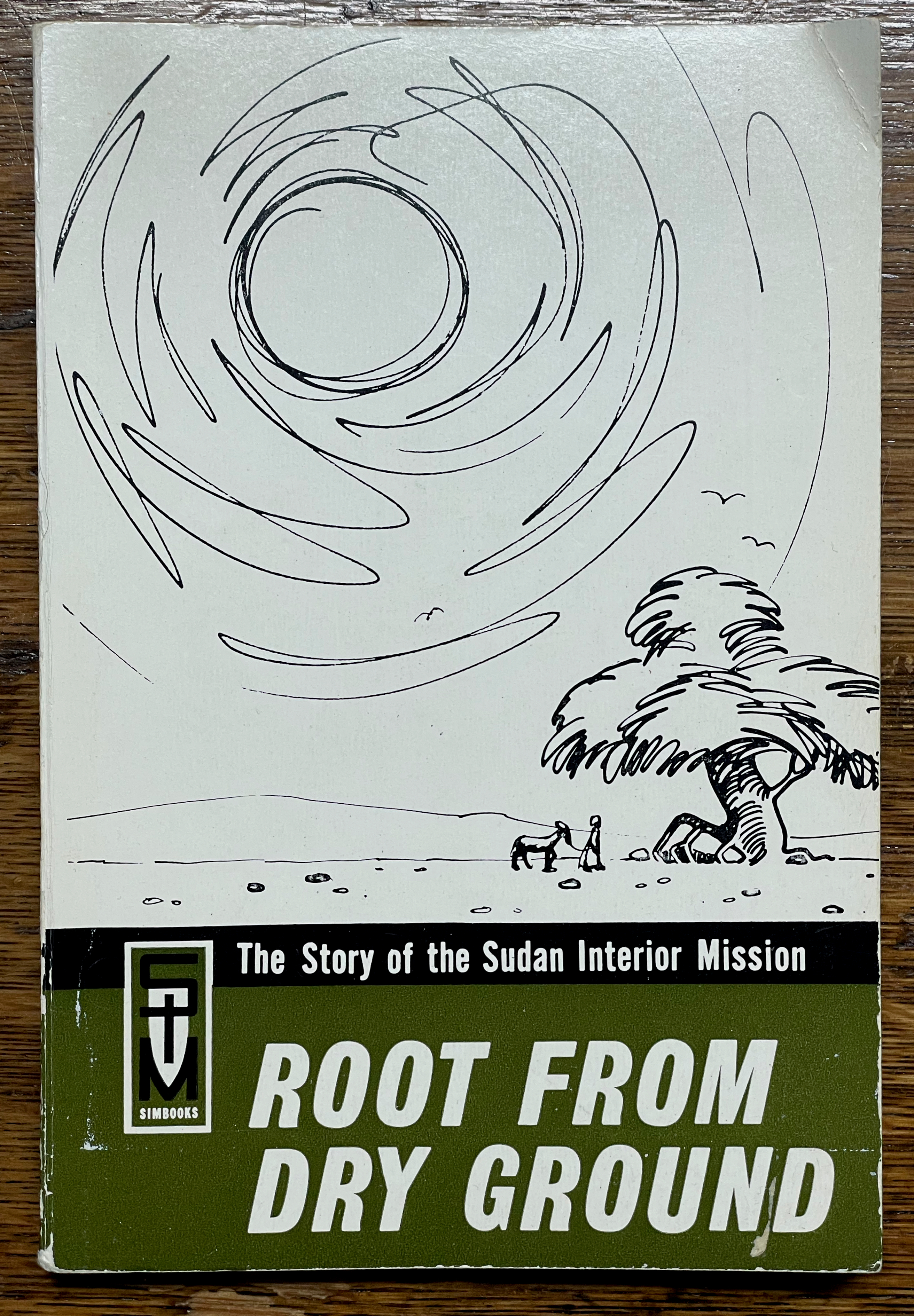
Root from Dry Ground: The Story of the Sudan Interior Mission
Root from Dry Ground: The Story of the Sudan Interior Mission was published in 1966 by the Sudan Interior Mission. Although no authors or editors were named, the first five chapters were adapted from an earlier history, Seven Sevens of Years and a Jubilee, written by Dr. Rowland V. Bingham and published posthumously in 1943. The final two chapters of Root from Dry Ground summarize the years from 1942 to 1966, and a presentation that Dr. Bingham gave on “How we became interdenominational” is included as an appendix.
As I am writing about SIM and its history today, please remember that this blog is our family’s personal site and is not affiliated with SIM.
I have long looked forward to reading this book, as it details the history of the missionary organization through which we serve. Having been associated with SIM since a short-term medical trip to one of their teams in 2004 and a member since 2013, I have long been generally familiar with our organization’s history, including:
- that three young men named Rowland Bingham, Walter Gowans and Thomas Kent felt God had called them to the interior (rather than the coastlines) of subsaharan Africa (then called “the Sudan”),
- that no existing organization would send them there, so they had formed their own,
- that they landed in 1893 in the port city of Lagos in what is now Nigeria,
- that that first effort “failed”, with each man getting ill and Bingham alone surviving,
- that Bingham was encouraged to continue by Gowans’ mother.
Each of these moments was included in the book in much more detail, and it cleared up a few misunderstandings I’d had about the details. For example, the reason given for other organizations refusing to send them was not that they believed the young men would perish but that those organizations didn’t have sufficient funds to support them as workers in new areas. The discouraging comments about their likelihood of dying had instead come from other missionaries they met in Lagos once they had landed there. Indeed, the Superintendent of the Methodist Mission there had told them, “‘Young men, you will never see the Sudan; your children will never see the Sudan; your grandchildren may.'”
SIM’s motto has long been, “By Prayer,” and it is fittingly reflected in Bingham’s, Gowans’ and Kent’s response to the Methodist superintendent and to their then-depleted finances of only $150 between them. “We therefore decided on a week of prayer and proposed to dispose of any keepsakes or non-essential articles. Prepared now to lay aside every weight, we had our sale. / The next mail that reached us brought us five hundred dollars.”
Symbolically, though, that superintendent wasn’t entirely wrong. In human eyes, SIM’s first expedition could be said to have failed, and a second trip ended even faster, with Bingham’s health again forcing him to leave Africa and the young men he’d taken with him following almost immediately afterward (due in large part to the discouragement of those like the superintendent). That dry ground only gave a lasting root from their third trip, which symbolically seems somewhat like the first pioneers’ “grandchildren.”
I believe the superintendent meant well, but his approach reminds me of the power and importance of encouraging others and of prioritizing God’s will—or the cost of failing to do so. He also reminds me of the words of Gamaliel to his fellow Pharisees in Acts 5:38-39 regarding the apostles preaching about Christ:
“So my advice is, leave these men alone. Let them go. If they are planning and doing these things merely on their own, it will soon be overthrown. But if it is from God, you will not be able to overthrow them. You may even find yourselves fighting against God!”
Acts 5:38-39 (NLT)
The powerful blessing that we can offer through encouragement is also shown in the words of Walter Gowans’ mother when Bingham brought her her son’s personal belongings. How hard must that visit have been for him, especially as a young man of only 22 years or so, and how understandable it would have been for Mrs. Gowan to speak hurt or anger. But instead, she told him “these words, that I shall never forget. ‘Well, Mr. Bingham, I would rather have had Walter go out to the Sudan and die there, all alone, than have him home today, disobeying his Lord.'” Part of our missionary training has been in helping people through their emotional trauma, and I am so glad that Bingham was able to hear such healing words from his late friend’s mother.

It was very interesting to read of SIM’s growth through the decades, especially through both World Wars and the beginning of the Cold War and decolonization. The history was being shared in 1966 and was thoroughly anchored in that moment, referencing new countries that have since changed their names or ceased to exist, such as Republic of Dahomey (now Benin) and Republic of Upper Volta (now Burkina Faso).
It was also interesting to see how the name was used then. Like many organizations, SIM has changed its name a few times, and even how it uses its acronym has changed. It now goes by “SIM” alone (rather than it standing for Sudan Interior Mission or the later “Society for International Ministries”), but in 1966, the emphasis was clearly still on the name, as the abbreviation was always presented as “the SIM”. Even now, different offices sometimes vary between saying “SIM” as a word (as in simulation) or as three letters. In some English-speaking countries, the trade name “Serving in Mission” is used.
There is a great amount of history left uncovered, both in depth because this is a short book (63 pages) and in breadth because much has happened since 1966. There is no mention of SIM’s five mergers with other organizations, as the earliest occurred in 1982, and certainly much has changed in the world itself. For me, that imperfection is another favorite reminder from reading this: that the story of our efforts, our lives and our organizations is always continuing, that any glimpse can only be a snapshot, and that everything is incomplete until the final trumpet. May we all do well with the days we are given and with the people entrusted to us in relationships or for moments.
For anyone interested in reading Root from Dry Ground: The Story of the Sudan Interior Mission, there are currently two used copies available on Amazon at https://www.amazon.com/gp/product/B0015V56ZW, as well as electronic copies available from Goodreads at https://www.goodreads.com/book/show/148885459-root-from-dry-ground and other sources.
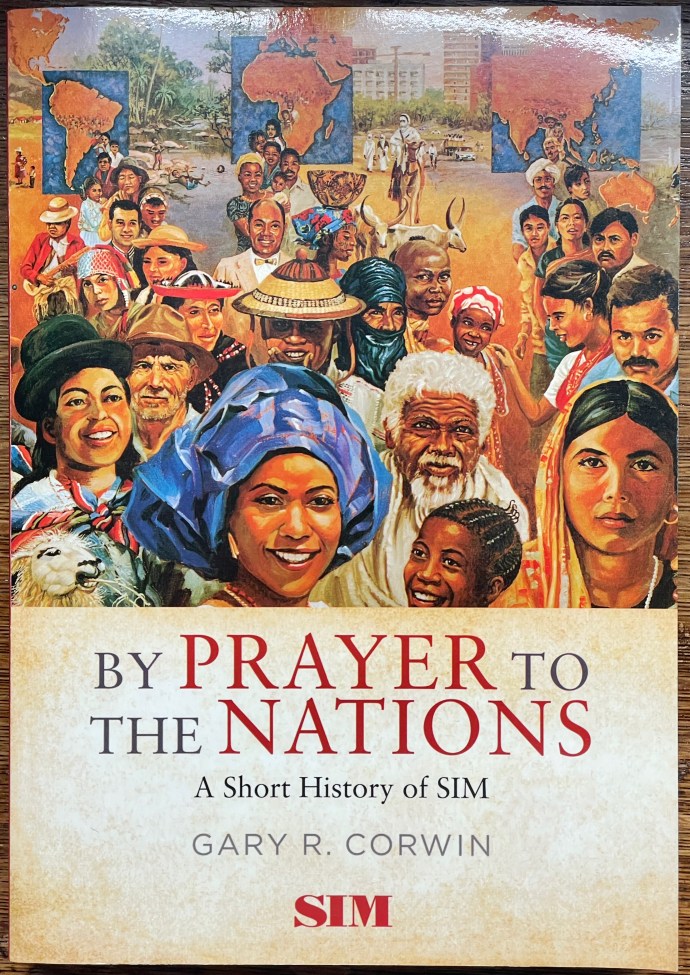
Anyone interested in a deeper and more recent history of SIM would be well-served by Gary R. Corwin’s By Prayer to the Nations: A Short History of SIM, available from Amazon at https://www.amazon.com/Prayer-Nations-Short-History-SIM/dp/162586082X
 The Heffron Family
0
Sent from Outlook for Androidhttps://aka.ms/AAb9ysg